
Assembly Staff Titles and Billing Rules
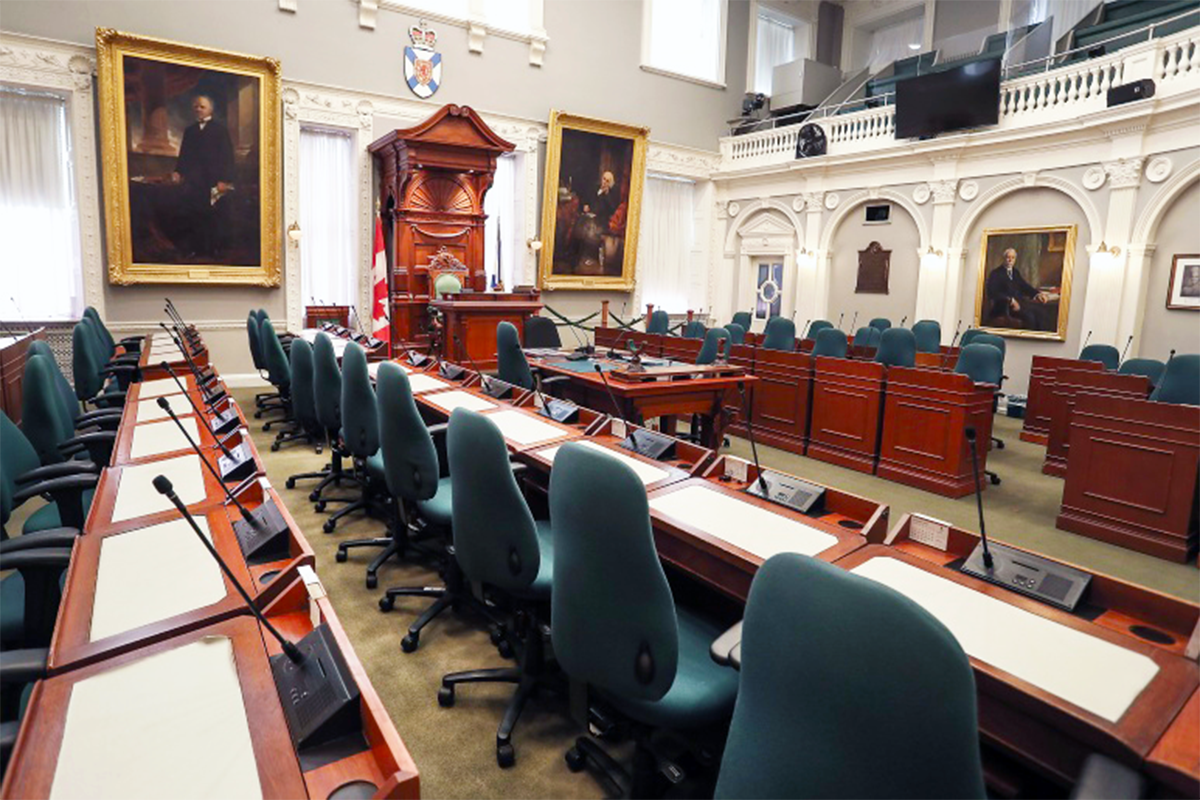
The House of Assembly Management Commission Regulations in Nova Scotia were amended through N.S. Reg. 224/2025 and 225/2025. These amendments, enacted pursuant to subsection 27(1) of the House of Assembly Management Commission Act, reflect updates to roles, titles, and procedures within the Commission, particularly regarding staff designations and bill payment processes.
The amendments under N.S. Reg. 224/2025 focus primarily on the replacement of the term “assistant” with “coordinator” across various sections of the House of Assembly Management Commission Regulations, originally established under N.S. Reg. 43/2013. This change applies to multiple clauses and subsections, including Clauses 6(2)(a) and 19(1)(b), as well as Subsections 21(1) and 24(1) through 24(7). Each instance where “assistant” or “assistants” previously appeared has been systematically updated to “coordinator” or “coordinators” to better reflect the current organizational structure and terminology used within the Commission. These amendments cover references to both Constituency Coordinators and Deputy Speakers, ensuring consistency throughout the regulatory framework. Additionally, Section 40A of the regulations has been repealed, though no further detail is provided regarding its previous content or implications. Other clauses, including 41(2)(b) and 43(1), have similarly been amended to update the terminology in line with the overall change from assistant to coordinator. These revisions signal a formal recognition of the evolving roles within the administrative structure and help clarify responsibilities, titles, and reporting relationships within the House of Assembly.
N.S. Reg. 225/2025 introduces amendments related to bill payments under the House of Assembly Management Commission Regulations. Section 7 has been expanded with new subsections (2B) and (2C) to address timing and accounting for expenditures. Subsection (2B) establishes that expenditures for third-party rebilling, including utilities, property taxes, or other items charged to a member under an authorized lease agreement, are considered incurred on the date of the invoice rather than the date of payment. This clarification ensures proper accounting treatment for these charges and aligns billing practices with invoice dates, providing certainty for both members and administrative staff. Subsection (2C) addresses late invoices for electrical utility services related to the 2024-25 fiscal year. If such an invoice is received after the ninety-day period specified in the regulations, the expenditure is deemed to have been incurred on the invoice date. This provision ensures that delayed billing does not affect the proper recording of expenses and allows for accurate financial reporting and compliance with fiscal deadlines.
Overall, the amendments under N.S. Reg. 224/2025 and 225/2025 modernize the terminology used for administrative roles and clarify procedural rules for financial transactions within the House of Assembly Management Commission. By updating the designation of assistants to coordinators and refining the rules for bill payments and third-party rebilling, the regulations ensure more precise alignment with current operational practices and improve administrative clarity, consistency, and efficiency in the management of the House of Assembly.
Nova Scotia (224-225/2025) November 12, 2025
Disclaimer: Insights are for informational purposes only and does not reflect RRI’s official position or constitute legal opinion.