
Preparing Canada’s Newest International Bridge for Operation
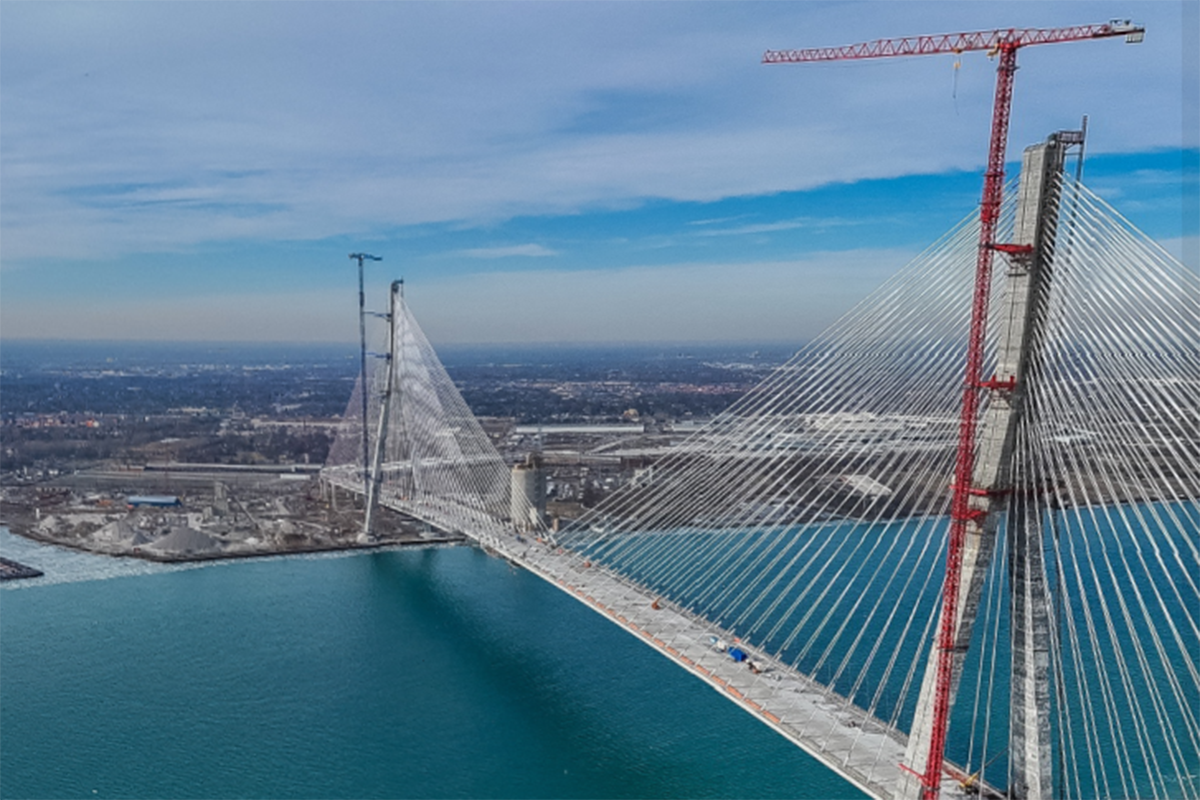
The Regulations Amending the Schedule to the International Bridges and Tunnels Act and the International Bridges and Tunnels Regulations (SOR/2026-46) formally integrate the Gordie Howe International Bridge into Canada’s federal regulatory framework governing international crossings. Enacted under the authority of the International Bridges and Tunnels Act (IBTA), the amendment ensures that the new Windsor–Detroit crossing is subject to the same safety, operational, reporting, and oversight requirements as other international bridges and tunnels once it becomes operational.
The central issue addressed by the amendment is regulatory inclusion. The IBTA establishes a comprehensive regime administered by Transport Canada for international bridges and tunnels, covering construction, operation, maintenance, ownership changes, and structural safety oversight. However, because the Gordie Howe International Bridge project was initially advanced under the Bridge to Strengthen Trade Act (BSTA) to expedite construction, it was exempt from certain IBTA approval processes during its development phase and therefore was not originally listed in the IBTA or International Bridges and Tunnels Regulations (IBTR) schedules. As construction nears completion, regulatory alignment is required to bring the bridge within the standard federal oversight system.
The Gordie Howe International Bridge is a major infrastructure project connecting Windsor, Ontario, and Detroit, Michigan—one of the busiest trade corridors between Canada and the United States. Announced in 2012, the project was designed to increase cross-border capacity and improve the resilience of freight and passenger movement. The Windsor-Detroit Bridge Authority (WDBA), a federal Crown corporation, was created to manage the project through its lifecycle, including procurement, construction, and eventual operation under a public-private partnership model.
The IBTA, enacted in 2007, provides the legislative foundation for regulating international bridges and tunnels in Canada. It requires that listed infrastructure comply with federal oversight mechanisms, including approval processes for construction or structural modifications, mandatory reporting on structural integrity and load capacity, and notification requirements for operational changes such as closures, toll adjustments, or permitted vehicle types. The IBTR, established in 2009 under the IBTA, sets detailed operational requirements for bridge and tunnel owners, including inspection standards such as underwater inspections every five years and detailed visual inspections every two years.
The objective of SOR/2026-46 is to ensure that once the Gordie Howe International Bridge enters service, it is fully integrated into this regulatory regime. By adding the Bridge to Strengthen Trade Act (S.C. 2012) to the IBTA schedule and explicitly listing the Gordie Howe International Bridge in the IBTR schedule, the amendment brings the bridge under federal oversight obligations. This ensures that the WDBA, as the responsible operator, must comply with all applicable IBTA and IBTR requirements, including maintenance reporting, inspection schedules, and approval processes for any future structural, operational, or ownership changes.
Canada (46/2026) March 25, 2026
Disclaimer: Insights are for informational purposes only and does not reflect RRI’s official position or constitute legal opinion.