
Pipeline Reviews Shift to a Single Regulator
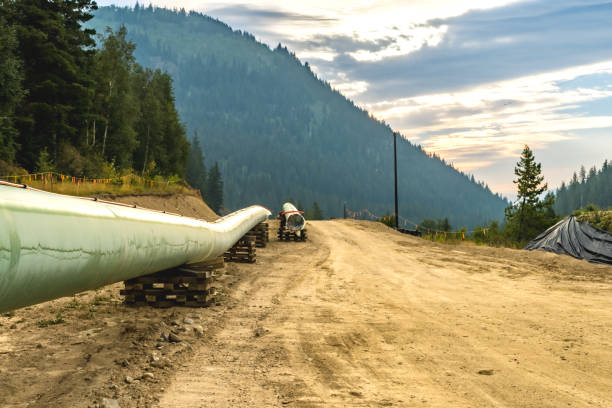
The Government of Canada has amended the Physical Activities Regulations under the Impact Assessment Act (IAA) to simplify the federal assessment process for major projects and clarify which projects remain subject to the Act. Regulations Amending the Physical Activities Regulations by removing several types of projects from the IAA’s designated project list. The changes are intended to reduce duplication where another federal regulator already has responsibility for assessing and regulating a project throughout its life cycle.
The amendments respond to broader federal efforts to make major-project reviews more efficient. In particular, responsibility for projects regulated under the Canadian Energy Regulator Act (CERA) is being assigned to the Canada Energy Regulator (CER), rather than requiring an integrated assessment involving the IAA process.
Several definitions and provisions in the Physical Activities Regulations have consequently been changed. The definition of “international electrical transmission line” has been repealed, while the definition of “new right of way” has been replaced. The revised definition applies to land being developed for a railway line or an all-season public highway that is not alongside and contiguous to land previously developed for an electrical transmission line, oil and gas pipeline, railway line, or all-season public highway.
The amendments remove several categories of projects from the schedule to the Physical Activities Regulations. These include international and interprovincial pipelines, international and interprovincial electrical transmission lines, and offshore renewable energy projects regulated under the CERA. They also remove oil and gas pipelines and facilities in national parks and protected areas when regulated under the CERA, as well as oil and gas facilities that are functionally integrated into a federal work or undertaking regulated under the CERA.
Two other project categories are also removed. These are in situ oil sands extraction facilities with bitumen production capacity of at least 2,000 cubic metres per day in provinces without provincial legislation limiting greenhouse gas emissions from oil sands, and fossil fuel-fired power generating facilities. As a result, these activities will no longer be designated projects under the IAA based on their inclusion in the Physical Activities Regulations.
The changes build on amendments to the IAA enacted in 2024 following the Supreme Court of Canada’s October 13, 2023 decision concerning federal jurisdiction under the Act. The amended legislation narrowed the concept of adverse effects within federal jurisdiction, focused federal decision-making on those effects, and increased reliance on provincial processes and cooperation.
Canada (185/2026) September 15, 2026
Disclaimer: Insights are for informational purposes only and does not reflect RRI’s official position or constitute legal opinion.